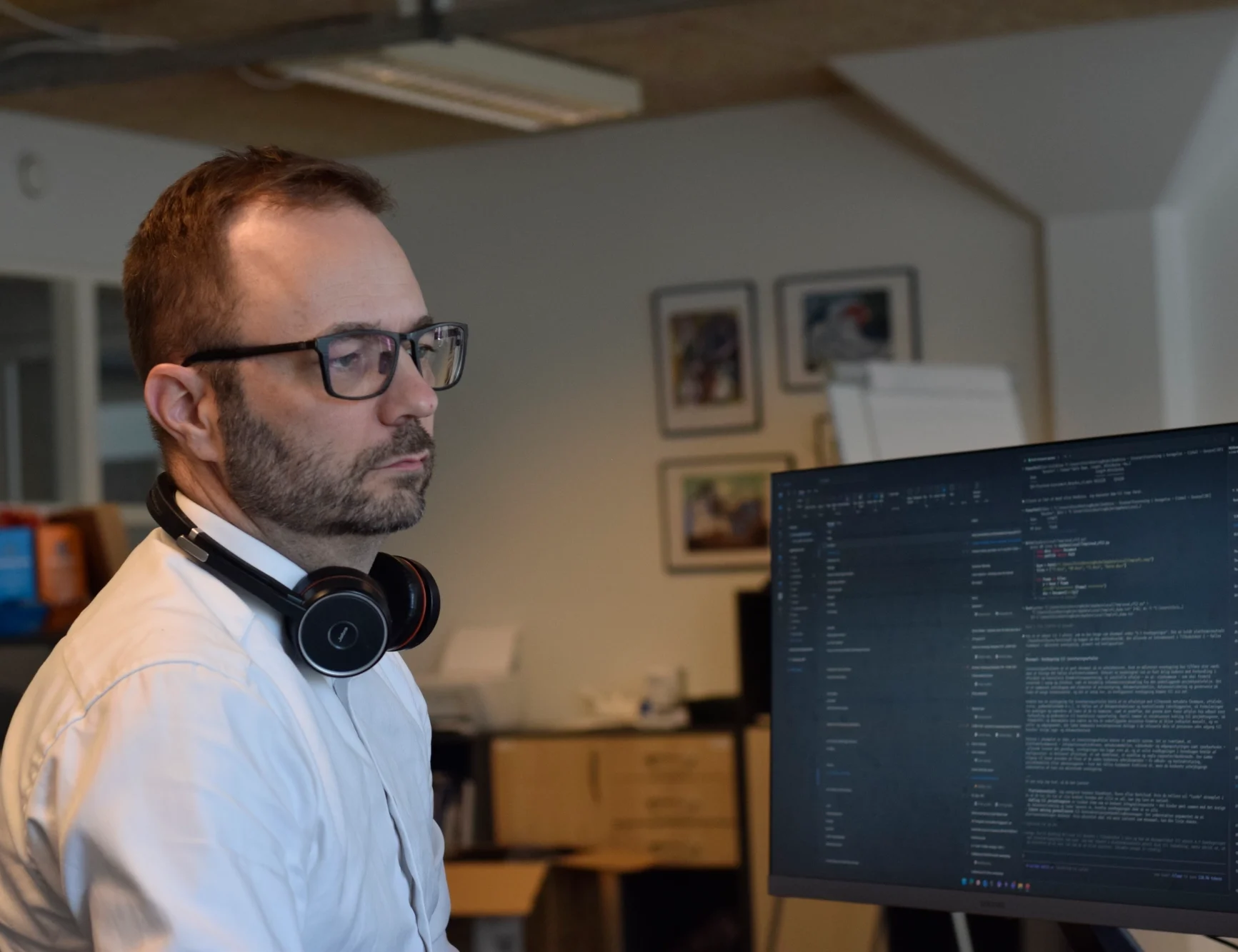


Christian is a new addition to the Strator team, having been with Strator since 2024, and is here to bring some young blood into the company. With his bright smile, youthful attitude and endless cute pictures of his baby, Christian brings energy to the office like no other.
Christian, what is your role at Strator?
I actually have two roles at the moment. On one hand, I am an IT-consultant, which means I do technical work for customers. I mostly do things along the lines of automating SharePoint-websites, or providing the clients with automated workflows for example. And on the other hand, I am a part of the sales department of Strator, where I try to find new opportunities to expand Strator’s client-base.
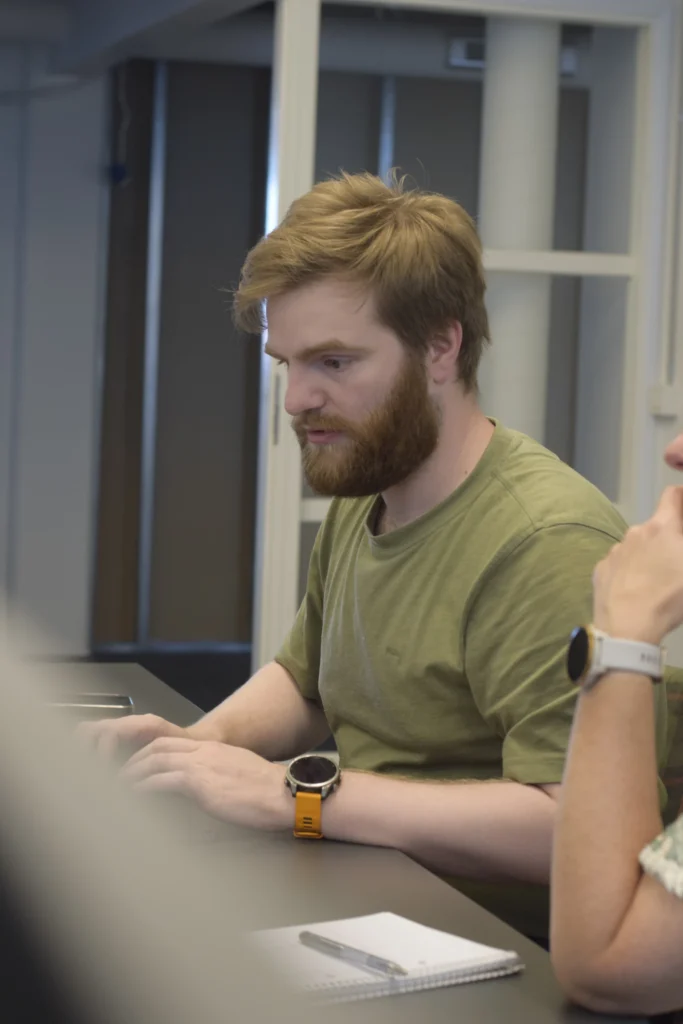
I studied computer science, which is like a Swiss Knife in the IT-sector. During my studies, I learned the basics of almost everything IT, from coding to architecture to analysis. I decided to go to the job market with this solid all-round basis. I started at the Strator as a mix between a business-consultant, an analytic-consultant, and a technical-consultant. With time, I drifted over to the technical side.
I get mostly technical assignments now, which I’m happy about! My first long term project was a large data migration in which we had to extract the metadata and adapt it to the organisation-switch the client was going under. We had to reorganise and rename documents, execute the migration, and deliver an end-to-end report to ensure everything went as planned.
I really enjoyed getting to know the company we were working with. Typically, we investigate the data, the structure it has, the current state of things, etc. We’re trying to figure out what the company needs, and the reasoning. We get to do a bunch of nerdy analysis around data, and combine it with business development to get a lay of the land. Then, there is the technical aspect where you make flows, applications or software. It’s a lot of fun because you get to be technical and nerdy.
After about a year, the project was completed, and it was time for something new. Ulrich decided to take me under his wing, and taught me all about SharePoint. I spent almost all of 2025 learning all there is to know about SharePoint from a senior in the field. It gave me new skills and tools to use as a technical consultant
It’s nice to hear you were taught so much by your colleague. Is there a lot of support between colleagues?
On the rare occasions when we have a slow day, we always find something else to do by helping coworkers. It’s how we go about doing work pro-actively. Aside from that, I think we’re also good at taking care of everybody’s needs and differences. We’re good at embracing people and accommodating them. If anyone is ever a little low on work, we have no issue asking them to help with things either. It’s just how we do things.
This way we also get a pretty clear view of the strengths of the different people working here. It makes us able to really utilise their skills to the fullest, which in turn increases the number of services Strator can provide to a client. Dinah is a good example of this. She possesses a specific skill set and knowledge on how to classify data and files, and she does so with a specific kind of insight she gets from her background. That lead to the creation of the Strategic Information Management – Lite as a part of our Summer Clean-Up campaign. Especially right now, people could really use Dinah’s specific skill set. Making sure your data-landscape is clean and in order is getting more important by the day.

Do you experience those issues with unkept data landscapes a lot in the field?
It is one of those reoccurring issues we come across in the field. We often take on data migration projects in which the project manager, obviously, wants to be most efficient with the time allocated to the project. However, often times we see clients wanting to save time with a migration by forgoing an initial clean-up. We come into the project and are tasked with transferring large amounts of data from A to B, but we can’t complete our initial analysis as it should be, because the data isn’t structured, it’s not classified, or classified in an inconsistent way. The time constraint leads the clients to ask us to proceed with the migration anyway, but then we lose more time on the other side of the migration instead.
After the migration, we need to make sure all the data has been transferred properly, but if the original batch of data is in complete disarray, it takes way more time to cross reference everything. Aside from time, it also uses up way more of your data allowance to not clean up your data beforehand. When we do a clean-up we look for old, unused, empty and/or corrupted files which take up unnecessary space. Migrating them is completely pointless, and even unbeneficial for the client. Once migrated, the data might look nice because it is in a new UI, but it is still that same mess. Classifying your data would actually enable you to gain efficiency, and allow you to use new technologies to further develop your workflow.
On our end, Having a clean starting point makes it easier to reassure the client that all the work has actually been done correctly. If we are able to show the client one-to-one that the migration has been completed with an optimal structure, there is actual proof that everything is in order, compliant, and that nothing was lost. Carrying out an unstructured migration isn’t impossible, It just requires more resources because everything is less streamlined. Nine times out of ten, forgoing a clean-up of your old structure to try and save time, costs you more time and money in the end.
My advice for any reader would be: clean up your data before getting into a migration, and keep it clean after the migration as well. Do it yourself, have us do it, or someone else, because your data fills up quickly, and having a clean data landscape saves you a lot of time and money in the grand scheme of things, even outside of a migration.
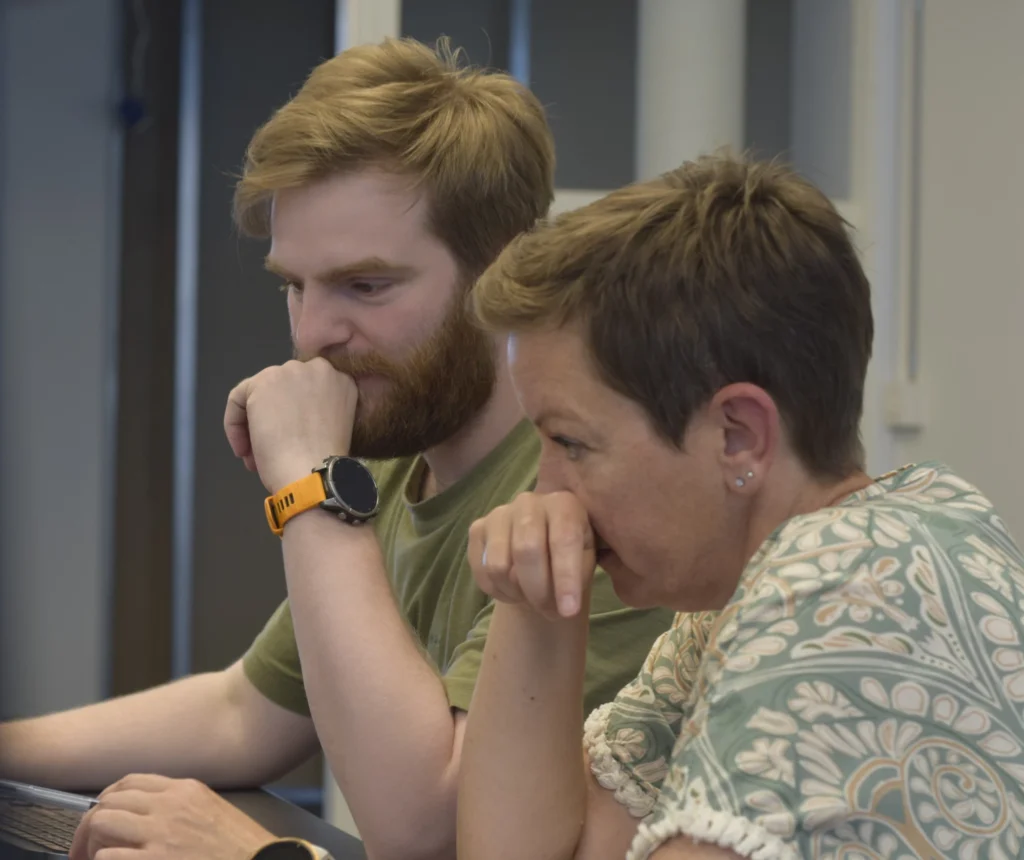
Lastly, is there anything you’re looking forward to at Strator?
I’m looking forward to gaining more experience as a part of the sales team at Strator. I’m very excited to help the company reach greater heights and expand to work on bigger projects on larger scales. I would love to eventually help Strator expand and get bigger projects from big clients.