

In this new series of Blogposts, we will introduce the people that make Strator what it is. With this first interview, we will be introducing Ulrich Bojko, our Head of Development, by asking him about his experiences at Strator. He shares insights on the importance of experts, reliance on AI, and digital sovereignty.
Since 2025, Ulrich has become a core part of Strator. Despite this relatively young cooperation, Ulrich has proven himself to be a valuable part of the team as a man of many ideas with a rigorous work-ethic and a lot of funny jokes. As a SharePoint expert and a business development enthusiast, Ulrich helps Strator reach a little further every day by developing new tools, carrying out massive migrations, and coming up with new ways in which Strator can help companies turn their information into a competitive advantage.
How did you get started at Strator?
My career at Strator started as an external consultant. I am a SharePoint expert and had been working with SharePoint Online and on-premises since 2008. I usually tell people that I can pretty much make SharePoint do anything that they want it to. I’ve made a ton of different solutions, from contract management and QMS systems to extranets and customer portals. Some of them were completely custom-coded, but more recently they have been based on SharePoint functionalities.
Either way, I started as an external consultant for Strator because clients asked them, “Well, now you have moved all of our data into SharePoint, so can you help us do other things with this SharePoint platform?” Of course, this is a completely different speciality, which is where I came in, and I fell in love with Strator and the people there.
When I first saw Strator, it struck me as probably the most boring company I’d ever been invited to. I mean, these librarian geeks talking about classification models and V-models and validation, and all these insane abbreviations like EQ, IQ, PQ, OQ, and whatnot. I thought, “How do you not just die a little inside every day from working with this? This is like a whole new level of geekiness.”
But once I really dug into it, I realised it wasn’t that boring. The moment you need to move 3 or 4 million files without losing any of them, while having it all under control and being able to prove that you did everything correctly, it starts becoming fun. I’m not only building technical solutions, but I’m also getting my hands dirty in the piles of data.
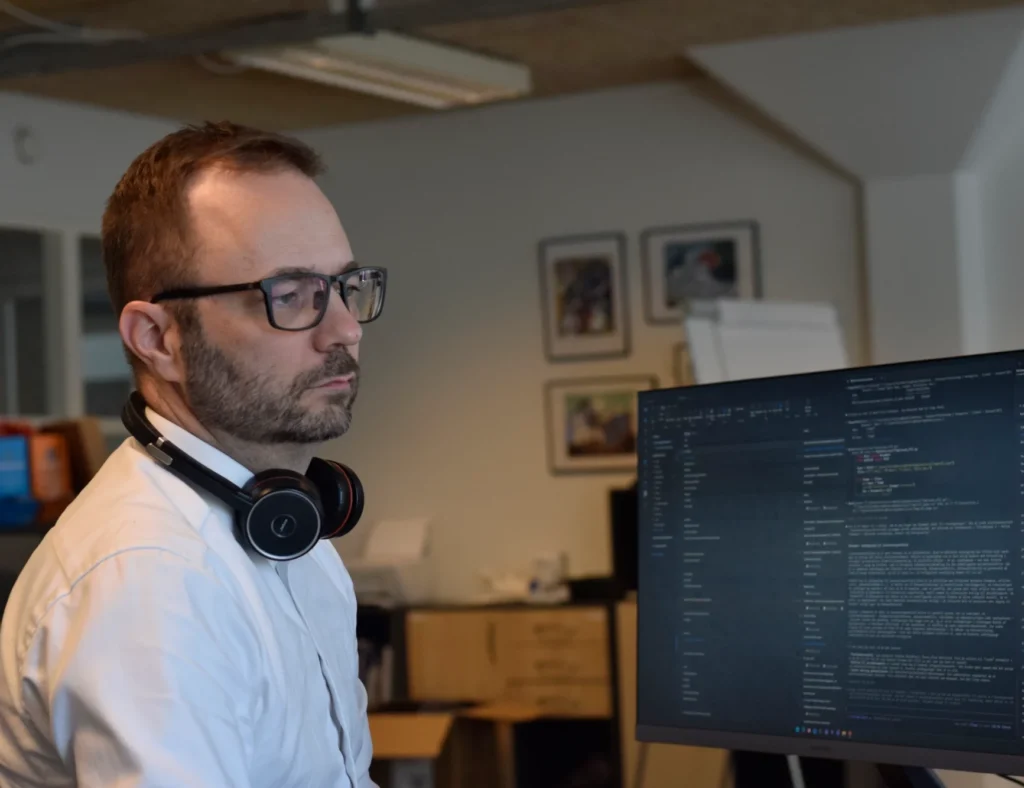
You’re currently the Head of Development. What does that mean?
I’ve always been fond of business development, even though I was a freelancer for 10–12 years. If I saw an opportunity, an issue, or a requirement at a company that I couldn’t solve, I always liked being the one with the network to do something about it. I also love talking to a lot of companies, not just clients.
When it comes to business development, I love developing ideas into real products or real offerings that a company can deliver, given the capabilities of the team. I just like seeing how we can package it, do sales, and build a network of clients, vendors, and partners. It’s about 50% of what I do, while the other 50% is solving clients’ SharePoint issues or building things for SharePoint.
I also follow European policy and politics quite a bit as part of the business development side of things. I like seeing opportunities in politics and pinpointing them for our business or our clients.
A lot of politicians are talking about digital sovereignty at the moment, for example, and it is something I have been talking about for the past 20 years. Now, with the shifts in the political climate around the US, the need for digital sovereignty is finally showing up on people’s radars. Every conversation between a vendor and a public-sector institution, municipality, ministry, government, or whatever will have digital sovereignty as number one on the agenda.
Good thing I love advising clients on how to achieve digital sovereignty: not by purchasing a licence, but by adapting certain capabilities. Especially when there are so many misconceptions about digital sovereignty caused by so-called “sovereignty washing,” where companies market their product as the magical button to becoming sovereign. People like swiping a card and believing they are digitally sovereign after five minutes. But suddenly, your new sovereignty-solution reaches a certain limit, requiring you to buy an upgrade, or the price just goes up. Before you know it, you’re stuck with a vendor lock-in and are no longer digitally sovereign. This can happen with both open-source solutions and, let’s say, a Microsoft solution. Making sure people see that is also what I want to do by building a network.
You really seem to enjoy guiding and advising as a part of business development.
I really like having that advisory role. These days, that comes with its own difficulties, though, as AI is often used as some kind of advisor. It’s quite risky because it’s very persuasive in guiding everybody towards the same one-stop-shop solution, since the big models are based on American thinking. You could get a European AI, but either way it is going to be based on some kind of model which will guide its answer. If people want actual knowledge, based on years of experience, they still need a person giving them personalised advice. I love doing that because advice is never a one-size-fits-all situation. I love getting familiar with a company and understanding its processes. All that business development, for Strator or for a client, is something I really enjoy. It allows me to use my technical knowledge and my communication skills. Operating between the tech and the boardroom is really where I’m most at home.
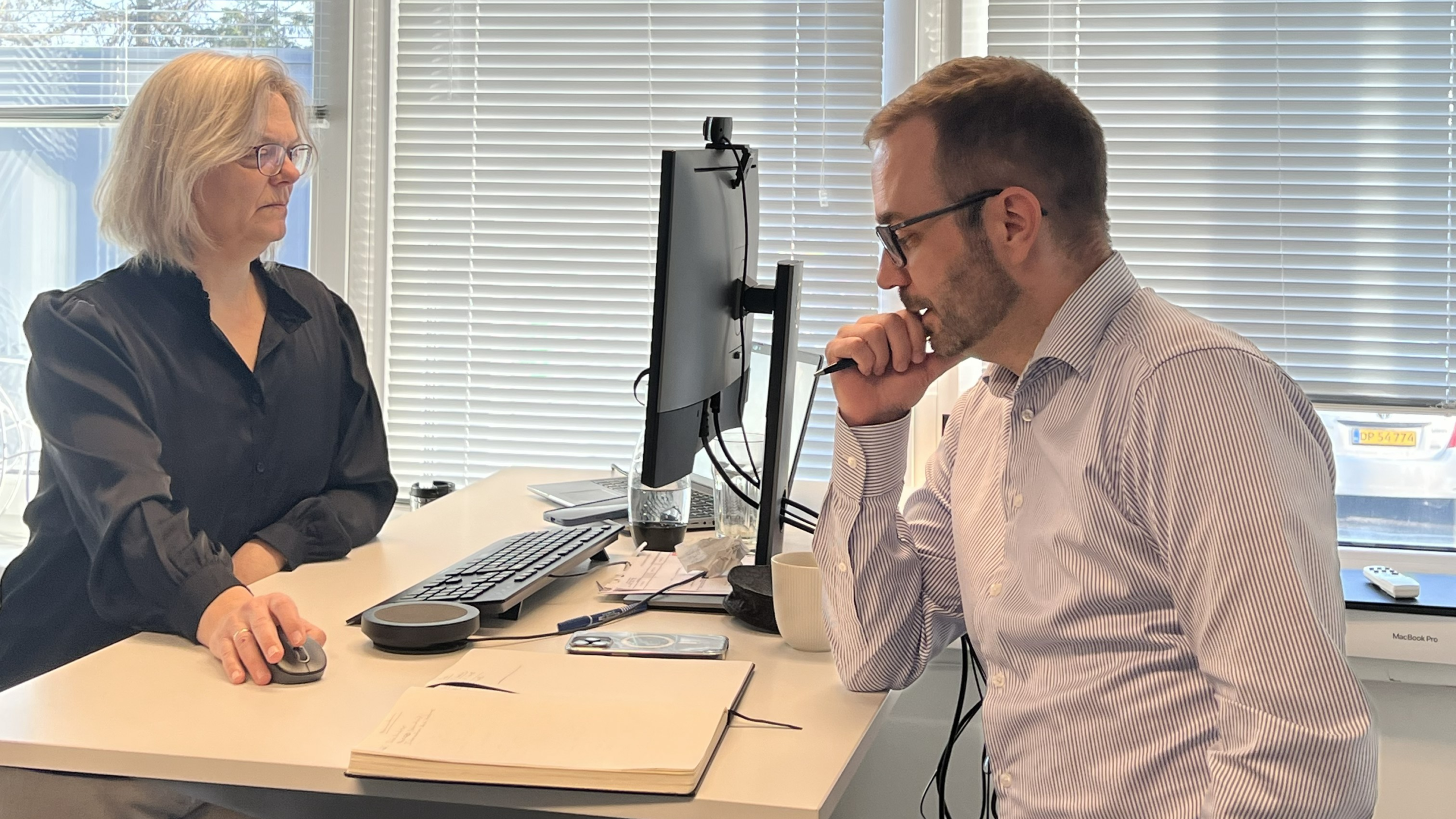
Is this over-reliance on AI something you encounter often?
That and the reliance on licensing to get everything in order instead of relying on actual capability or certain structures. AI is an extremely powerful tool, but it is just a tool. It doesn't work without the proper preparations.
People don’t want to focus on the boring parts, like getting their data in order first. That lack of a solid foundation is why you see statistics showing that somewhere between 70 and 95% of AI implementations or AI projects do not actually deliver the value they were expected to. People have stopped relying on specialists and experts because of all the marketing fluff, and because they don’t have time to go deeper. Besides that, AI will always answer in the way it thinks the prompter wants to be answered, which is why it cannot have the same value as an expert.
That is also some advice I would give to readers: think slow. AI is also a bubble, and it is important to know that it can pop. Companies can go bankrupt and AI services can increase in price drastically overnight. If you’re using AI without thinking about it too much, you might eventually start using AI instead of thinking. What do you do when the bubble bursts?
Be very, very careful when replacing people with AI. It is a handy tool that doesn’t have any critical sense, it doesn’t look beyond the parameters you give it, and it might not be as certain as you think it is. It can be the biggest digital sovereignty threat you can have because, suddenly, if it stops working or gives you wrong answers while your business depends on it, what do you do?
In short: think slow, build a workflow instead of only relying on AI, and hang on to those very valuable human values and capabilities in your team during this AI age.
Lastly, is there a project in the (near) future you are looking forward to?
Well, we've been developing these small tools for clients made to increase their digital sovereignty by helping them govern their SharePoint websites. I've been calling them our "Blueprints", and I am very excited to see them come to life. I've been working on a scan we will be using for our Strategic Information Assessment - Lite, and I will soon talk more about something I've been calling "Site Lifecycle Governance" as a part of these Blueprints. We are still working on the Blueprints, but we will release more news about them as time goes on.