
Document migration is not simply a matter of moving information from one system to another. Migration must also ensure that documents, metadata, and relationships retain their integrity throughout the entire process.
If a migration is not planned and executed systematically, it may result in a loss of documents, loss of metadata, or loss of document integrity, and therefore evidential value. In regulated environments, this may have compliance implications. In other organisations, it may result in the loss of business-critical information or reduced confidence in the reliability of the migrated data.
For these reasons, Strator follows a documented migration methodology designed to ensure quality and control throughout the migration process, thereby preserving the integrity and value of your organisation's information.
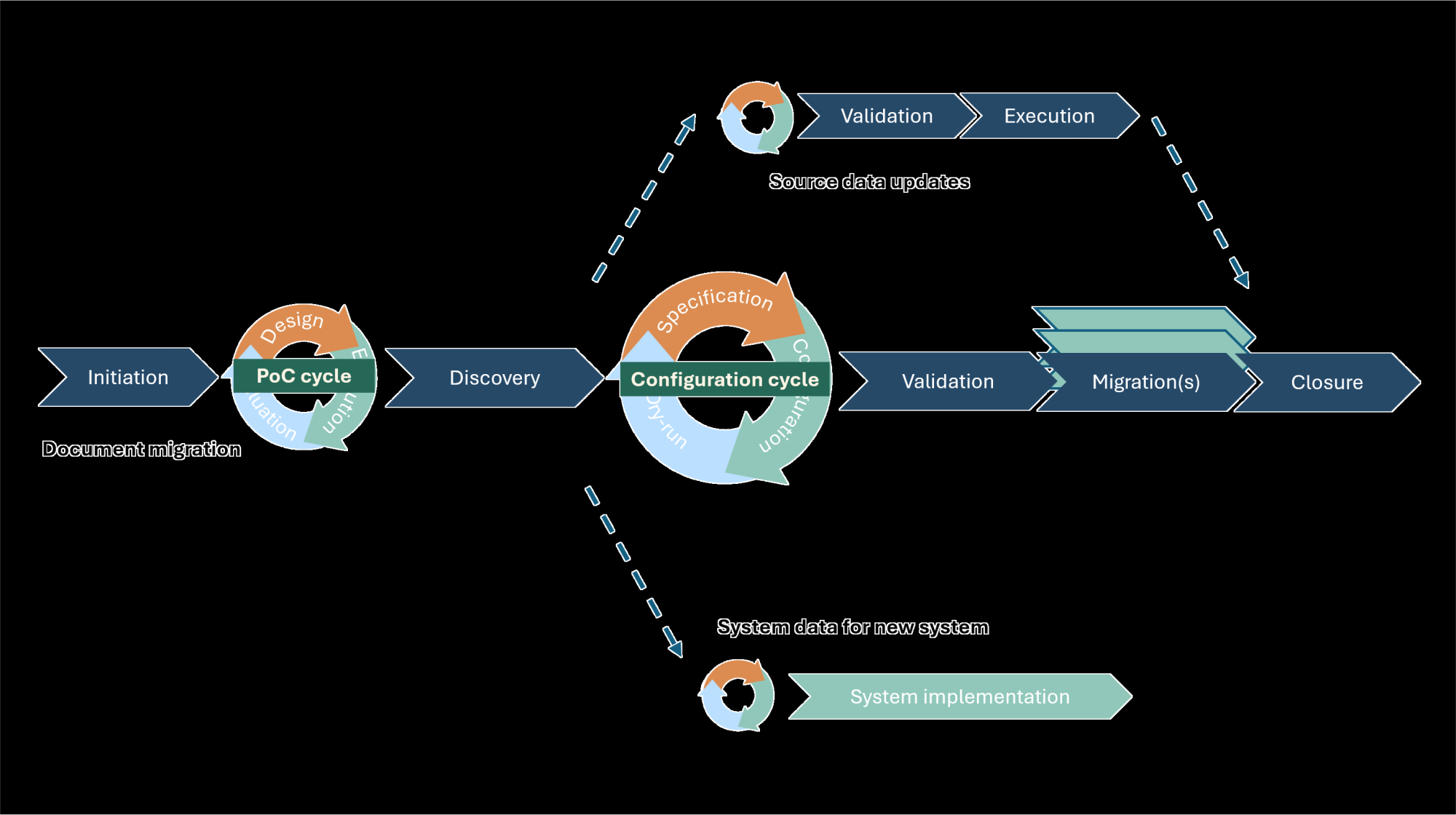
Our methodology is based on the principles of ISO 13028 and has been further developed through experience gained from a large number of migration projects. In addition, it has been extended to support GxP-regulated environments, where specific requirements apply to documentation, traceability, and documented control.
GxP-Regulated Environments
For organisations operating under GxP regulations, the migration methodology can be applied in two ways — under our QMS or under yours.
The migration can be performed under Strator's Quality Management System. In this case, the methodology's process model, templates and documentation are used as the governing framework for the project, adapted to the risk profile of the specific migration. Strator is responsible for the complete migration documentation and reporting.
Alternatively, the migration may be carried out under the customer's instructions and Quality Management System. In this case, the relevant elements of the methodology, templates and best practices are used to support the customer's existing procedures and documentation requirements, thereby enabling the project to benefit from both proven artefacts and experience gained through previous migration projects – all within the framework of the customer's own QMS.
Non-Regulated Environments
Many organisations do not require the level of documentation typically associated with GxP-regulated environments.
In these cases, Strator applies the same process and the same fundamental principles of quality and control from the methodology, while adapting the scope of documentation, testing and controls to the specific risks and business requirements of the project.
This allows the organisation to benefit from working methods and quality principles developed for regulated environments without having to perform activities or produce documentation that do not add value in the specific context.
The result is a migration process focused on what matters most: ensuring that documents and associated metadata are transferred correctly, and that the quality of the outcome can be demonstrated to a degree that matches the organisation's requirements and risk profile.